
Additional Menu

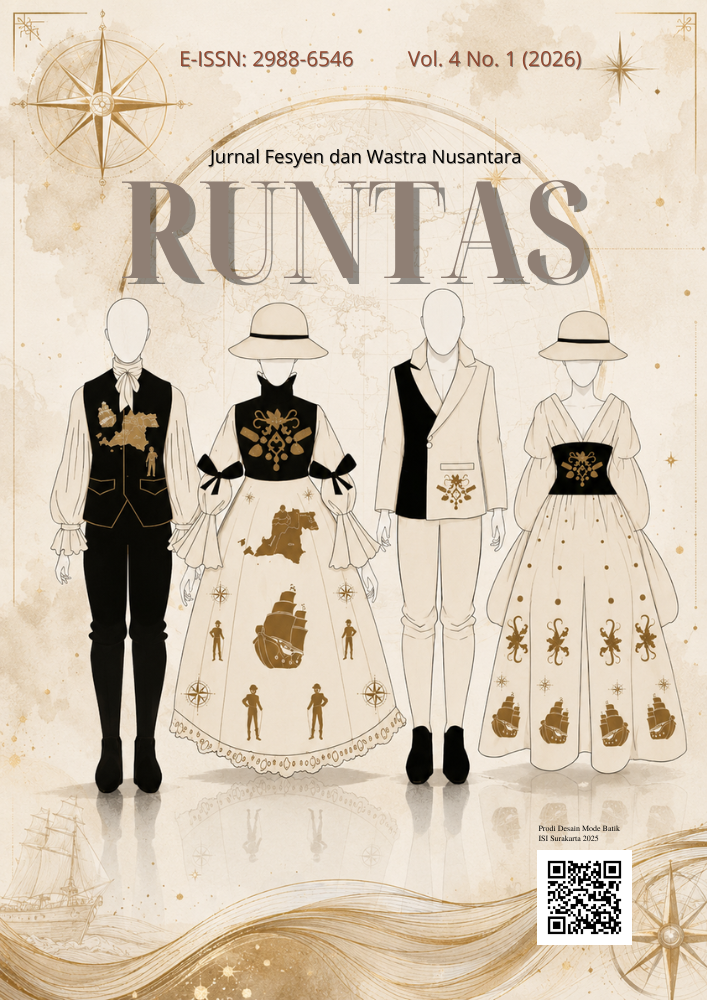
Culture and Tradition in Fashion and Batik focuses on the exploration of cultural heritage and traditional values as sources of inspiration for fashion and batik innovation. The theme covers studies on textile arts, traditional clothing, batik design, craftsmanship, aesthetics, sustainability, and creative practices that preserve and reinterpret cultural identity in contemporary contexts. It welcomes interdisciplinary research that bridges tradition with innovation in fashion and textile design.
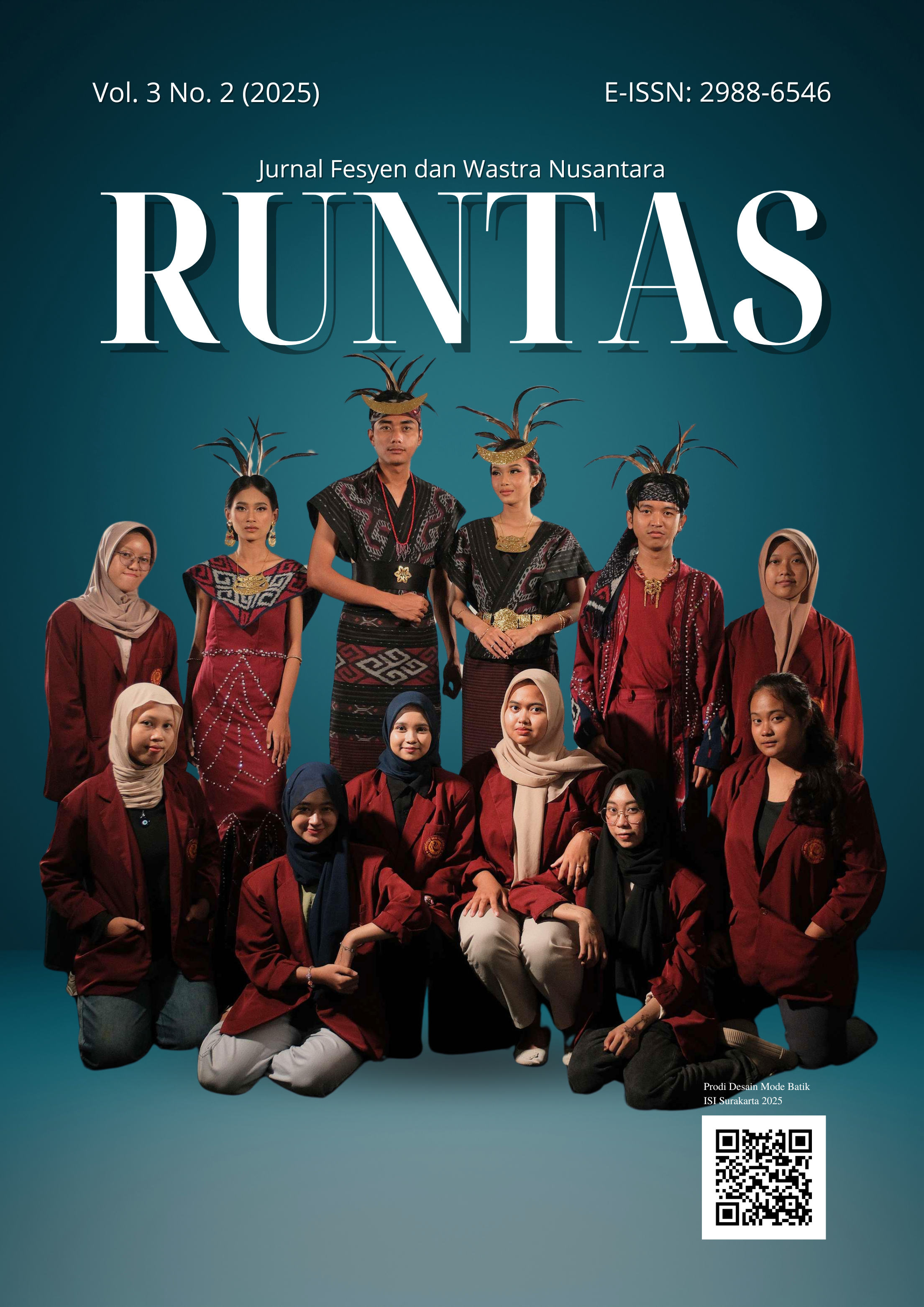
Batik represents one of the most important traditional garments of the Indonesian archipelago, embodying cultural values, local wisdom, and historical continuity across regions. As a textile tradition, batik is produced through wax-resist techniques that preserve distinctive motifs symbolizing philosophy, social structure, nature, and identity of Nusantara communities. Batik functions not only as clothing but also as a cultural artifact used in rituals, ceremonies, and everyday life. Its continued use in traditional attire demonstrates how batik sustains cultural heritage while adapting to social change, positioning it as a living tradition that connects past, present, and future within Indonesian fashion culture.

Batik has expanded beyond its traditional function into the realm of fantasy-inspired fashion, where it becomes a medium for creative exploration and artistic expression. Through imaginative design processes, batik motifs, colors, and textures are transformed into conceptual garments that emphasize visual drama, symbolism, and narrative aesthetics. In fantasy creations, batik is no longer limited to conventional patterns but is reinterpreted through experimental silhouettes, layered structures, and innovative styling techniques that reflect fictional themes and artistic visions. This approach positions batik not only as cultural heritage but also as a contemporary fashion language capable of conveying emotion, character, and storytelling within creative fashion productions.
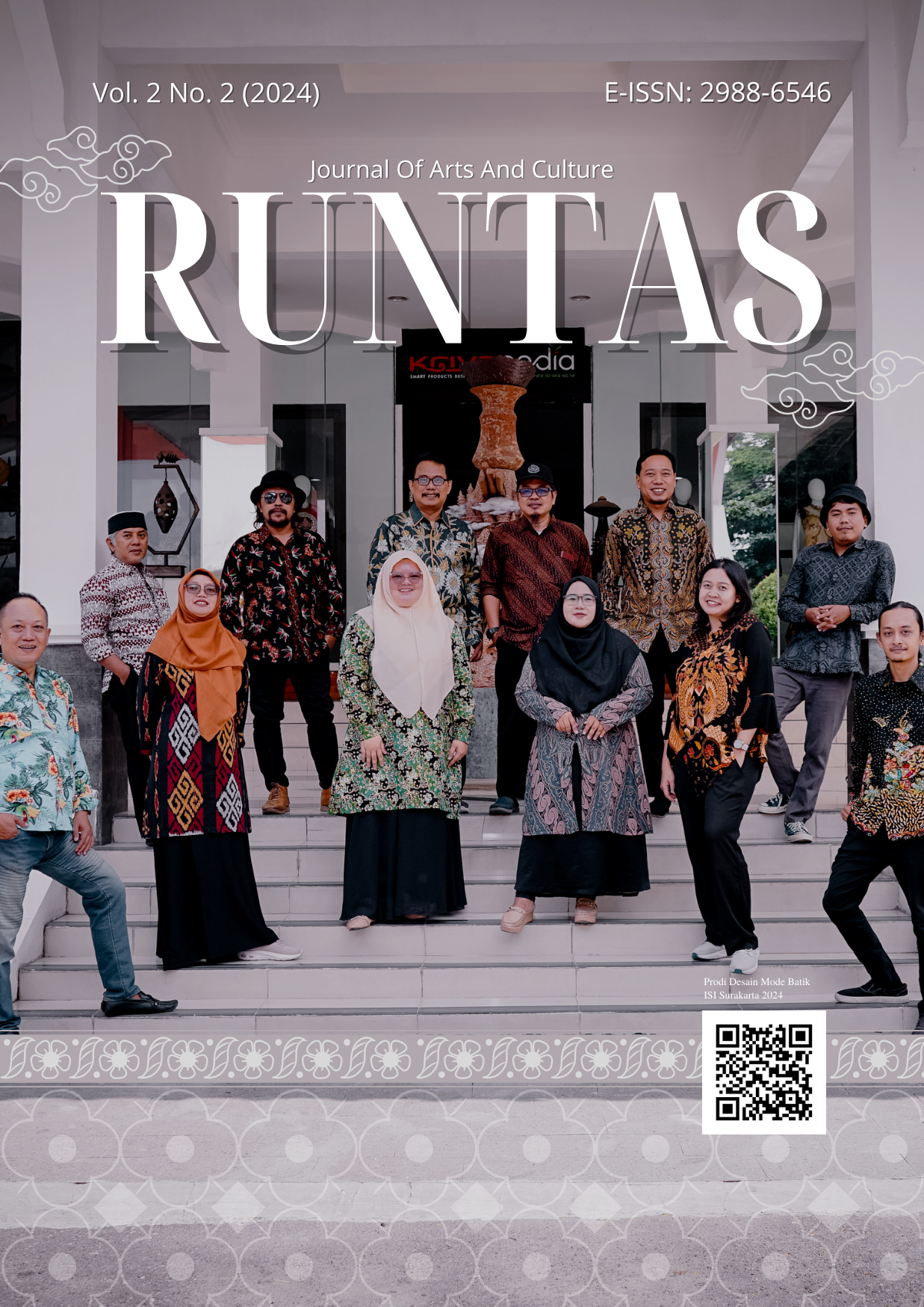
Batik is one of Indonesia’s most significant cultural heritages, recognized internationally for its artistic, philosophical, and technical values. Traditionally created using wax-resist dyeing techniques, batik embodies local wisdom, symbolism, and identity that are transmitted through patterns, colors, and motifs. Each motif reflects social status, historical narratives, and environmental influences, making batik not merely a textile product but also a cultural medium. In contemporary contexts, batik continues to evolve as artisans and designers integrate traditional craftsmanship with modern production technologies and aesthetic sensibilities.
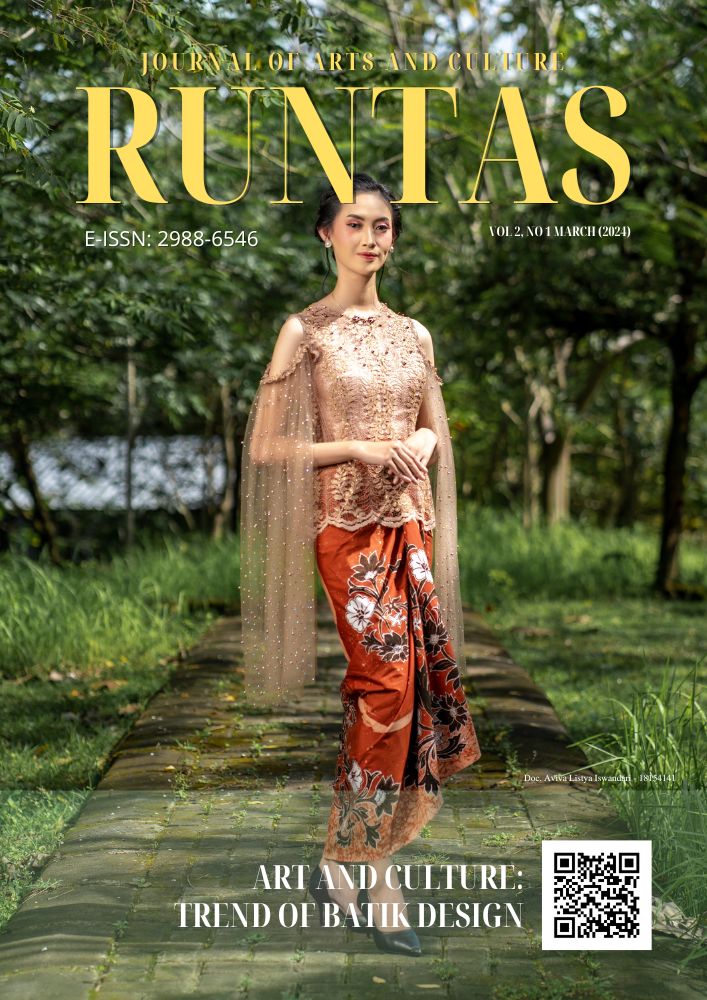
The history of the archipelago is depicted in thousands of words that describe the beauty of clothing. Inspired by various cultures in various regions and expressing it in beautiful fashion works. Rewrite it from a creative process perspective that is easy to understand
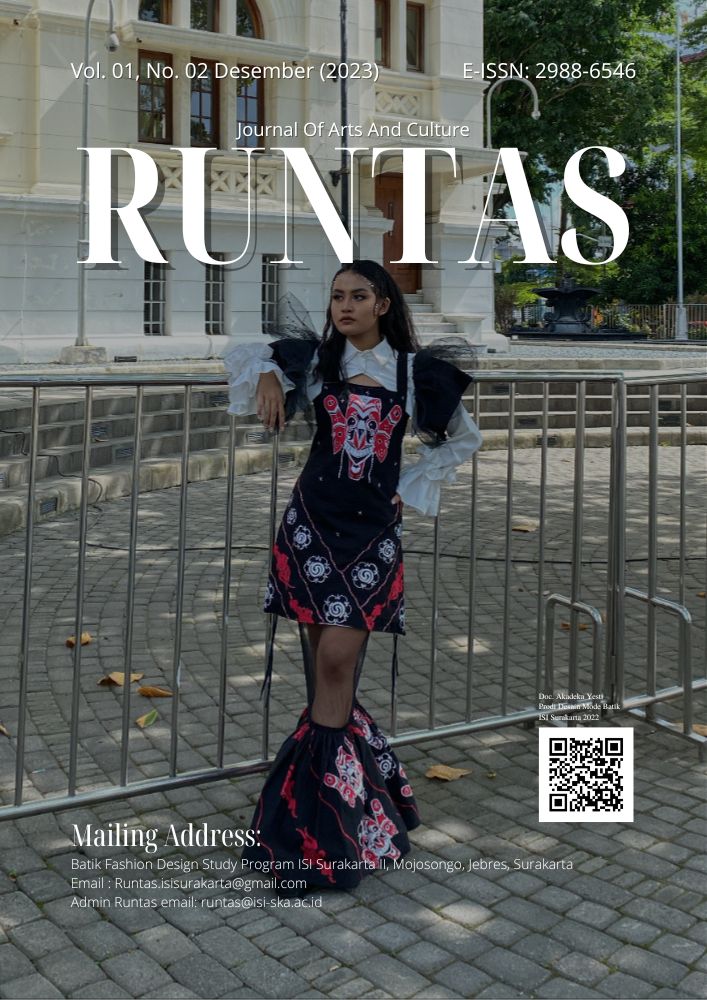
Japanese wisteria and kawung motifs as the development of batik for artwear is the opening of our work which focuses on creating artwear. Artwear is unique art. a space of freedom for fashion designers. then, do you have similar and more interesting work? come on tell us. We hope to be able to read your story in your work


